
Complete Investor Guide to Indonesian Property

Navigate Indonesia's Hak Pakai and leasehold structures to unlock opportunities in Bali and Southeast Asia's largest economy

Updated February 14, 2026Advanced24 min read

Rental yield
8.3%
Gross, indicative
Price growth
0.6%
Year on year · Sep 2026
Transfer tax
5.0%
Currency
IDR (Indonesian Rupiah)
Population
277 million

Key takeaways

  • Foreigners CANNOT own freehold land (Hak Milik) in Indonesia -- the strongest title is only available to Indonesian citizens
  • Hak Pakai (Right to Use) is the primary ownership structure for foreigners: 30 years, extendable to 80 years total (30+20+30)
  • KITAS (Temporary Stay Permit) or KITAP (Permanent Stay Permit) is required to hold Hak Pakai title

Market Overview

Indonesia's economy is driven by strong domestic consumption, a young workforce, and growing digital sector. The government's infrastructure push, new capital city project, and Bali's tourism recovery provide multiple growth catalysts. Foreign property investment is supported by gradually relaxing ownership rules, though significant restrictions remain.

Country
Indonesia
Currency
IDR (Indonesian Rupiah)
Population
277 million
GDP growth
5.1% (2024 est., typically 4.5-5.5%)
Inflation
2.8% (2024 est., typically 2.5-4.0%)

Key industries

  • Tourism & Hospitality
  • Manufacturing
  • Mining & Natural Resources
  • Agriculture & Palm Oil
  • Digital Economy & Tech
  • Financial Services

Restrictions

Foreign Ownership Restrictions

Restrictive

Indonesia has significant restrictions on foreign property ownership. Foreigners cannot own freehold land (Hak Milik). Several alternative structures exist, with Hak Pakai (Right to Use) being the strongest title available to foreigners.

  • Foreigners CANNOT own freehold land (Hak Milik) in Indonesia -- this title is exclusively for Indonesian citizens
  • Hak Pakai (Right to Use): Available to foreigners with KITAS/KITAP. Initial term of 30 years, extendable by 20 years, then renewable for 30 years (80 years total). Government Regulation No. 103/2015 and updated No. 18/2021 govern these rights.
  • Hak Sewa (Lease Right): Lease agreement directly with the landowner, typically 25-30 years with notarized renewal options. No KITAS required. This is the most common structure for foreign buyers in Bali.
  • Minimum property value thresholds for foreign buyers: IDR 1 billion (~USD 62,000) for apartments/flats, IDR 5 billion (~USD 310,000) for houses. These thresholds vary by province and are set by regional government.
  • PT PMA (foreign-owned company) can hold Hak Guna Bangunan (Right to Build, 30 years + extensions) for commercial property. Requires BKPM approval and minimum investment commitment.
  • Bali-specific: The vast majority of foreign property investment in Bali uses leasehold (Hak Sewa) structures. Hak Pakai is less common for Bali villas due to KITAS requirements. Always use a notarized lease agreement with clear renewal terms.
  • Nominee arrangements (using an Indonesian citizen's name to hold Hak Milik for a foreigner) are illegal and not enforceable in Indonesian courts. The nominee can legally claim full ownership.

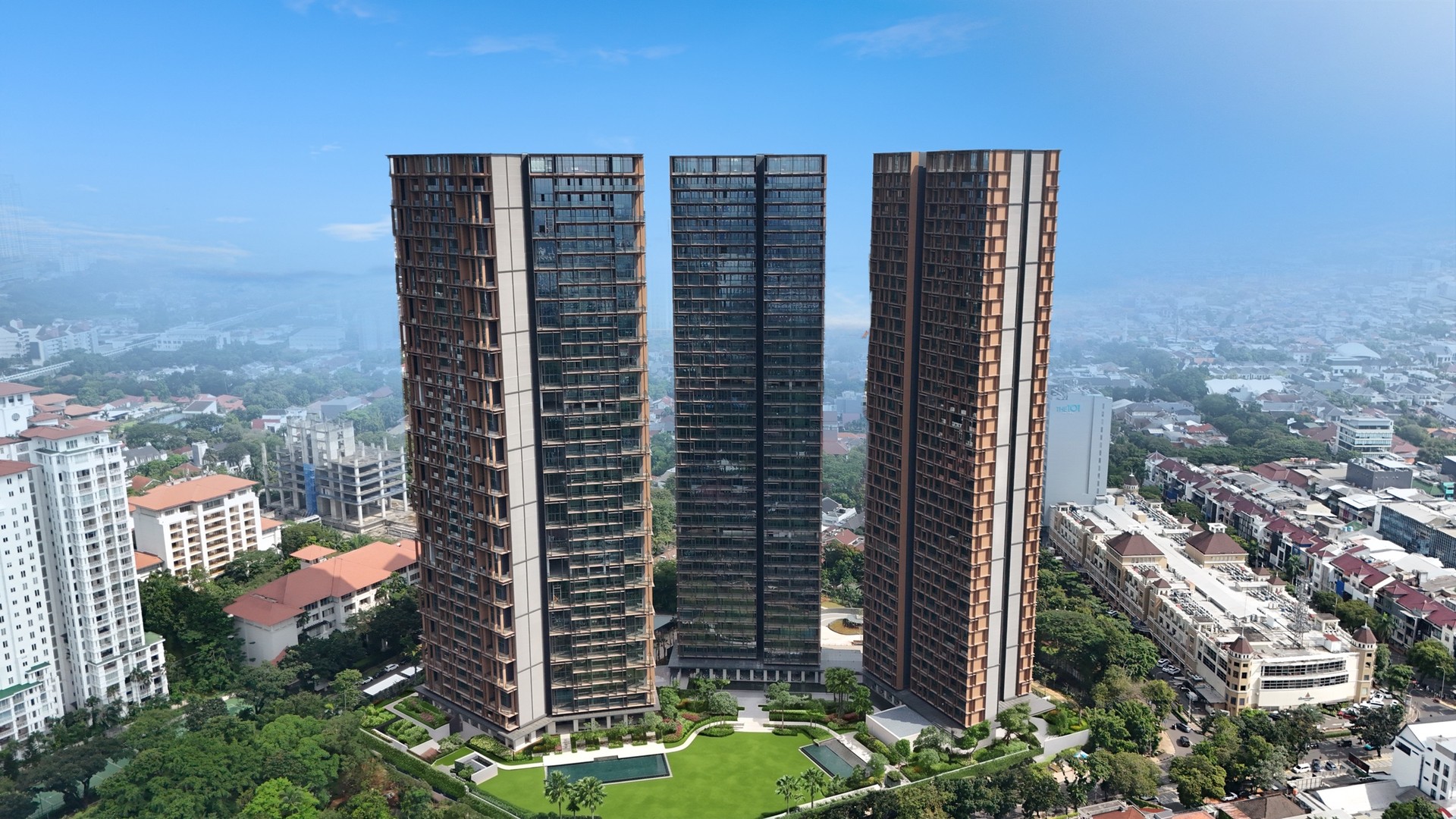
On INTRIC now — Residences in Indonesia are open to enquiry straight from this page.

Taxes & Fees

BPHTB (Acquisition Duty)

5% of value above non-taxable threshold (NJOP or transaction price, whichever higher)

BPHTB (Bea Perolehan Hak atas Tanah dan Bangunan) is the acquisition duty payable by the buyer when acquiring property rights. Calculated at 5% of the transaction value (or government assessed value, whichever is higher) minus a non-taxable threshold.

Additional information

  • Calculated on the higher of transaction price or NJOP (government assessed value)
  • First IDR 60 million is exempt (threshold varies by region)
  • Paid by the buyer before title transfer
  • Must be paid before BPN will process registration

Exemptions

  • First IDR 60 million is non-taxable (amount varies by region)
  • Certain inheritance transfers may have reduced rates

PPh (Income Tax on Transfer -- Seller)

2.5% of gross transaction value

PPh (Pajak Penghasilan) is the income tax on property transfers, paid by the seller. It is a flat rate calculated on the gross transaction value.

Additional information

  • Paid by the seller at the time of transfer
  • Calculated on the higher of transaction price or NJOP
  • Final tax -- no further assessment
  • Withheld by the buyer or notary in some arrangements

Exemptions

  • Very limited exemptions for certain government and social transfers

PBB (Annual Land and Building Tax)

0.1-0.3% of NJOP (government assessed value) annually

PBB (Pajak Bumi dan Bangunan) is the annual land and building tax. Rates are progressive based on the government-assessed value (NJOP). Relatively low for residential properties.

Additional information

  • PBB: Calculated on NJOP (government assessed value) minus non-taxable threshold
  • Rates are progressive based on NJOP brackets
  • Paid annually, typically due by August
  • Must be current before any property transfer

Exemptions

  • First IDR 10-12 million of NJOP is non-taxable (varies by region)
  • Low-value agricultural land may be exempt

VAT on New Property (PPN)

11% on new properties from developers (not on resale)

VAT (PPN -- Pajak Pertambahan Nilai) is charged on new property purchases from developers. The standard rate is 11% (increased from 10% in April 2022). Does not apply to secondary market (resale) transactions.

Additional information

  • Applies to new properties purchased from developers
  • VAT rate increased from 10% to 11% in 2022
  • Secondary/resale market purchases are not subject to VAT
  • Government occasionally offers VAT incentives for certain property sectors

Exemptions

  • Secondary/resale market not subject to VAT
  • Government may offer temporary VAT incentives for affordable housing

Rental Income Tax

10% final withholding (non-residents) or 5-35% progressive (residents)

Rental income from property is subject to income tax. Non-residents (including most foreign property owners) are subject to a 10% final withholding tax on gross rental income. Resident taxpayers (KITAS holders with NPWP) may elect progressive rates with deductions.

Additional information

  • 10% final withholding tax for non-residents
  • Can elect for progressive rates (5-35%) if beneficial
  • Tenants are responsible for withholding in some cases
  • Annual tax filing required with NPWP

Exemptions

  • Progressive rate filing available for residents with deductions
  • NPWP holders may benefit from lower effective rates

Requirements

Physical Visit to Indonesia

Optional

Highly recommended but not legally required. An in-person visit is especially important for Bali villa purchases to assess location, access roads, and neighborhood quality, which can vary dramatically even within short distances.

Process

  1. Visit target properties and surrounding areas
  2. Inspect build quality and infrastructure
  3. Meet with notaries, agents, and legal advisors in person
  4. Understand local customs and negotiation practices

Alternatives

  • Virtual tours
  • Trusted local representative
  • Agent representation

PT PMA Company (Commercial Property Only)

Optional

PT PMA (Penanaman Modal Asing -- foreign-owned company) can hold Hak Guna Bangunan (Right to Build) for commercial property purposes. Not typically needed for residential investment. Setting up a PT PMA requires a minimum investment commitment and is regulated by BKPM (Investment Coordinating Board). For residential properties, Hak Pakai or leasehold is preferred.

Process

  1. For residential: Hak Pakai (with KITAS) or leasehold -- no company needed
  2. For commercial: PT PMA incorporation through BKPM
  3. Minimum capital requirements for PT PMA (varies by sector)
  4. BKPM approval required for foreign investment activities

Alternatives

  • Hak Pakai (personal ownership for KITAS holders)
  • Hak Sewa (leasehold -- no company needed)
  • Nominee arrangement (RISKY -- not recommended)

Indonesian Bank Account

Required

Recommended for property transactions, ongoing tax payments, and rental income management. Required for KITAS holders. Major banks (BCA, Mandiri, BNI, CIMB Niaga) offer foreigner accounts with varying requirements.

Process

  1. Passport and KITAS/KITAP (or tourist visa for basic accounts at some banks)
  2. NPWP (tax identification number)
  3. Proof of address in Indonesia
  4. Minimum deposit varies by bank (IDR 500,000 - 5,000,000)

Alternatives

  • International wire transfer directly to seller/developer account
  • Escrow arrangements through notary

KITAS/KITAP Stay Permit (for Hak Pakai)

Required

KITAS (Izin Tinggal Terbatas -- Temporary Stay Permit) or KITAP (Izin Tinggal Tetap -- Permanent Stay Permit) is required to hold property under Hak Pakai title. Without a stay permit, foreigners can only access leasehold (Hak Sewa) structures. KITAS can be obtained through employment, business, retirement, or investment pathways.

Process

  1. Determine KITAS category (work, business, retirement, investor)
  2. Apply through Indonesian immigration or sponsoring company
  3. Required for Hak Pakai property ownership
  4. Annual renewal required for KITAS (KITAP is 5 years)

On INTRIC now — Still open in Indonesia — every one of these answers enquiries directly.

Purchase Steps

  1. Market Research & Strategy

    Duration
    2-4 weeks

    Research the Indonesian property market, understand the legal framework for foreign ownership, and identify target locations. Determine whether Hak Pakai (right to use) or Hak Sewa (leasehold) is the appropriate structure. For Bali villa investments, leasehold is the most common approach.

    Requirements

    • Define investment strategy (Hak Pakai vs Hak Sewa / leasehold)
    • Research target areas (Bali, Jakarta, etc.)
    • Understand minimum value thresholds for Hak Pakai
    • Budget including all taxes, fees, and notary costs

    Tips

    • Bali (Canggu, Seminyak, Uluwatu) for short-term rental yield; Jakarta for long-term capital appreciation
    • Decide early between Hak Pakai (requires KITAS) and leasehold (no KITAS needed)
    • Engage a local property consultant who understands foreign buyer structures
  2. Due Diligence & Certificate Verification

    Duration
    3-6 weeks

    Conduct thorough due diligence on the property, including certificate verification at BPN (National Land Agency), zoning checks, building permit (IMB/PBG) verification, and land boundary confirmation. For leasehold, verify the landlord's ownership certificate (Hak Milik or SHM).

    Requirements

    • Verify land certificate at BPN (National Land Agency)
    • Check zoning and land use permits (IMB/PBG building permit)
    • Confirm PBB (property tax) payments are current
    • Physical inspection and boundary survey if applicable

    Tips

    • ALWAYS verify the certificate directly at BPN -- do not rely on copies alone
    • Check for any disputes, encumbrances, or claims registered against the title
    • For Bali leasehold, confirm the SHM (freehold certificate) owner matches the landlord
  3. Legal & Financial Setup

    Duration
    2-4 weeks

    Engage a bilingual notary and PPAT (Pejabat Pembuat Akta Tanah -- land deed official) to prepare the transaction documents. Obtain an NPWP (tax identification number) if you do not have one. For Hak Pakai, ensure your KITAS/KITAP is valid. Arrange fund transfer to Indonesia.

    Requirements

    • Engage a PPAT (land deed official) and notary
    • Obtain NPWP (tax identification number)
    • Valid KITAS/KITAP for Hak Pakai transactions
    • Open Indonesian bank account (recommended)
    • Arrange international fund transfer

    Tips

    • Use a PPAT -- only they can execute binding land transaction deeds
    • NPWP application can be done online through the tax office website
    • Keep all proof of foreign fund transfers for tax purposes
  4. Transaction & BPN Registration

    Duration
    4-8 weeks for BPN registration
    Cost
    BPHTB (5% of value above threshold) + notary fees (~1%) + PPAT fees

    Sign the sale and purchase agreement (AJB -- Akta Jual Beli) before the PPAT. Pay all applicable taxes (BPHTB acquisition duty, PPh income tax on transfer). Submit the registration application to BPN for title transfer or Hak Pakai certificate issuance.

    Requirements

    • Sign AJB (sale deed) before PPAT
    • Pay BPHTB (acquisition duty) and other taxes
    • Submit to BPN for title transfer/registration
    • Receive ownership certificate from BPN

    Tips

    • All signatures must be done before the PPAT for legal validity
    • BPN registration can take several weeks to several months -- follow up regularly
    • Set up property management before leaving Indonesia

Property Types

Hak Pakai (Right to Use) Properties

Hak Pakai (Right to Use) is the primary legal structure for foreign property ownership in Indonesia. Available for apartments, houses, and land designated for residential use. Provides an initial term of 30 years, extendable by 20 years, then renewable for another 30 years (80 years total). Requires a valid KITAS or KITAP.

Advantages

  • Legally recognized foreign ownership structure with up to 80 years total tenure
  • Can be inherited and transferred
  • Registered at BPN (National Land Agency)
  • Suitable for long-term residential investment

Disadvantages

  • Not perpetual ownership -- maximum 80 years
  • Requires KITAS or KITAP (stay permit)
  • Extensions not automatic -- must be applied for
  • Minimum value thresholds apply (IDR 1B apartments, IDR 5B houses)
Typical timeline
6-12 weeks from agreement to BPN registration
Financing options
Cash purchase (standard), Limited bank financing for KITAS holders, Developer payment plans

Leasehold / Hak Sewa (Bali Villas & Land)

Hak Sewa (Lease Right) is the most common structure for foreign buyers in Bali. A lease agreement is made directly with the landowner, typically for 25-30 years with notarized renewal options. This structure does not require a stay permit, making it accessible to all foreign investors. Widely used for villas and commercial properties.

Advantages

  • Full control and use during lease period
  • No KITAS/KITAP requirement (unlike Hak Pakai)
  • Negotiable terms directly with landowner
  • Popular and well-established structure in Bali

Disadvantages

  • No ownership title -- lease agreement only
  • Renewal depends on agreement with landowner
  • No equity building in the land (only the building if built by lessee)
  • Risk of disputes if lease agreements are not properly drafted
Typical timeline
4-8 weeks for lease agreement execution and notarization
Financing options
Cash payment, Developer financing for villa projects, Private lending arrangements

Off-Plan Developments

Off-plan purchases in new developments, particularly villa projects in Bali and apartment towers in Jakarta. Developers typically offer installment plans during construction. Popular in Bali's rapidly developing areas like Canggu and Uluwatu.

Advantages

  • Payment plans spread cost over construction period
  • Modern international-standard developments
  • Bali villa developments with proven rental management
  • Lower entry price compared to completed properties

Disadvantages

  • Construction delays are common in Indonesia
  • Developer financial stability must be carefully assessed
  • Limited regulatory protection for off-plan buyers
  • Market conditions may change during 12-36 month construction period
Typical timeline
12-36 months from reservation to completion
Financing options
Developer payment plans (30-50% down, balance in installments), Cash on completion, Private financing

Investment Drivers

Largest Southeast Asian Economy

PositiveLong termHigh confidence

Indonesia is Southeast Asia's largest economy with a GDP exceeding USD 1.3 trillion and a population of 277 million. The growing middle class (estimated at 70+ million), rapid urbanization, and strong domestic consumption provide a solid foundation for property demand. GDP growth has been consistently 4.5-5.5% annually.

Bali Tourism & Digital Nomad Boom

PositiveLong termHigh confidence

Bali attracted over 5 million international visitors in 2024, driving exceptional rental demand in areas like Seminyak, Canggu, Ubud, and Uluwatu. Short-term villa rentals in prime Bali locations can yield 8-12% gross annually. The island's growing digital nomad community has created year-round demand beyond traditional peak tourist seasons.

New Capital City: Nusantara

PositiveLong termMedium confidence

Indonesia is building a new capital city, Nusantara, in East Kalimantan, expected to drive massive infrastructure investment (estimated USD 35 billion) and open new real estate markets. While the timeline has experienced delays, the relocation of government functions is progressing and creating early-mover investment opportunities.

Young Population & Urbanization

PositiveLong termHigh confidence

Indonesia has one of the youngest populations in Asia with a median age of approximately 30. Rapid urbanization (currently ~57%, projected to reach 70% by 2045) is driving sustained demand for residential and commercial property in major cities, particularly Jakarta, Surabaya, and Bandung.

Digital Economy Growth

PositiveMedium termHigh confidence

Indonesia's digital economy is Southeast Asia's largest, valued at over USD 80 billion and growing rapidly. The tech sector is attracting foreign talent and entrepreneurs, creating new demand for premium housing in Jakarta's tech hubs and Bali's co-working villa communities.

Currency Considerations

NeutralMedium termMedium confidence

The Indonesian Rupiah (IDR) has historically been volatile against major currencies, though Bank Indonesia actively manages stability. For foreign buyers, IDR depreciation can present favorable entry points. However, rental income in IDR may lose value when converted. Some Bali landlords negotiate USD-denominated leases.

Visa & Residency

Indonesia does not have a direct residency-by-investment program linked to property purchase. However, several visa and stay permit options are available to foreign property investors. Notably, the Second Home Visa and the new Golden Visa (launched 2024) provide long-term stay options. A KITAS (Temporary Stay Permit) is required to hold Hak Pakai property title.

Second Home Visa

The Second Home Visa (B211A category) provides long-term stay for foreign nationals who can demonstrate savings or investment of IDR 2 billion or more. It does not grant work rights but allows extended residence. Introduced in 2022 and updated in 2023.

Minimum investment
IDR 2 billion (~USD 125,000) in Indonesian bank savings or investment
Duration
5 years (extendable to 10 years)
Processing time
10-20 business days

Benefits

  • 5-10 year stay in Indonesia
  • Multiple entry privileges
  • Can be used to support Hak Pakai property ownership (with additional KITAS)
  • Open to all nationalities

Requirements

  • IDR 2 billion in savings/investments in Indonesian bank
  • Valid passport with at least 36 months validity
  • Health insurance covering Indonesia
  • Clean criminal record

Golden Visa (Launched 2024)

Launched in late 2024, Indonesia's Golden Visa targets investors, business owners, and high-net-worth individuals. Requires either corporate investment or personal investment in Indonesia. The program is relatively new and eligibility criteria may evolve.

Minimum investment
Corporate: IDR 2.5 billion (~USD 155,000) minimum company investment; Individual: Investment criteria being defined
Duration
5-10 years
Processing time
20-45 business days (early program -- processing times may vary)

Benefits

  • 5-10 year stay in Indonesia
  • Path to permanent residency (KITAP)
  • Work rights in certain categories
  • Family sponsorship options

Requirements

  • Meet minimum investment thresholds
  • Clear criminal record
  • Valid passport
  • Application through Indonesian immigration (DGIM)

Retirement KITAS

Available to foreigners aged 55 and over who can demonstrate adequate pension, savings, or passive income. Requires a sponsoring agent (typically a KITAS agent) and health insurance. The retirement KITAS allows property ownership via Hak Pakai.

Minimum investment
Proof of pension/savings of approximately USD 1,500/month or equivalent lump sum; health insurance
Duration
1 year (renewable annually)
Processing time
4-8 weeks

Benefits

  • 1-year stay permit (renewable annually)
  • Can hold Hak Pakai property
  • Open bank accounts and conduct limited activities

Requirements

  • Age 55 or above
  • Proof of pension or savings
  • Health insurance covering Indonesia
  • Sponsoring agent in Indonesia
  • No employment in Indonesia

Visa and immigration regulations in Indonesia change frequently. Property purchase alone does NOT grant any form of visa or residency. A KITAS/KITAP is a separate process from property ownership. Consult a licensed Indonesian immigration consultant for current requirements and processing times.

Financing

Indonesia is predominantly a cash-purchase market for foreign buyers. Indonesian banks generally do not lend to non-residents, and even resident foreigners (KITAS holders) face higher rates and lower loan-to-value ratios. Developer payment plans are the most accessible financing option, particularly for Bali villa and Jakarta apartment purchases.

Mortgage availability

Closed to foreign buyers

Indonesian banks generally do not offer mortgages to non-resident foreign buyers. Foreigners holding a KITAS (Temporary Stay Permit) or KITAP (Permanent Stay Permit) with documented Indonesian income may qualify for limited mortgage products from major banks, but approval is not guaranteed and terms are less favorable than for Indonesian nationals. Cash purchase is the norm for foreign buyers.

Typical LTV
50-60% for KITAS holders (domestic buyers typically 70-80% LTV)
Interest rates
8-12% for IDR-denominated loans (2025); foreign borrowers typically at the higher end
Term length
Up to 15-20 years for KITAS holders (shorter than domestic 25-30 year terms)

Requirements

  • Valid KITAS or KITAP (stay permit)
  • NPWP (Indonesian tax identification number)
  • Proof of income in Indonesia or from overseas employer
  • Property must be Hak Pakai eligible
  • Bank's valuation of the property

Alternative financing

Developer Payment PlansVery common in Bali and Jakarta, especially for off-plan villas and apartments
Developers frequently offer installment plans during construction, typically requiring 30-50% down payment with the balance spread over 12-36 months. In Bali, some developers offer post-completion installment plans. Terms vary widely between developers.
Indonesian Bank Mortgage (KITAS Holders)Limited to KITAS/KITAP holders with Indonesian income; major banks include BCA, Mandiri, BNI
Some Indonesian banks offer mortgages to foreign nationals who hold a KITAS (Temporary Stay Permit) or KITAP (Permanent Stay Permit) and can demonstrate income in Indonesia. Loan-to-value ratios are typically lower for foreigners (50-60%) with higher interest rates than domestic borrowers.
Offshore Financing / Home-Country EquityDepends on buyer's home country equity and banking relationships
Foreign buyers sometimes leverage equity in home-country properties or use personal loans from their home banking market to fund Indonesian property purchases. This is a common strategy for Bali villa investments.

Financing options for foreign buyers in Indonesia are very limited. The vast majority of foreign property purchases are cash transactions. Indonesian bank mortgages for foreigners require a stay permit (KITAS/KITAP) and are subject to higher rates and lower LTV ratios. Consult a qualified financial advisor for current options.

Figures are indicative and subject to change. Regulations, taxes and market conditions vary by jurisdiction. Do your own due diligence and seek independent legal and financial advice.